Between mid-2025 and mid-2026, "context engineering" moved from an informal practitioner label to a recognizable engineering discipline. It started as scattered commentary around agent-building: Cognition's essay on long-running agents, Simon Willison amplifying Tobi Lütke and Andrej Karpathy's framing, LangChain's July 2025 taxonomy, Anthropic's engineering guide. By 2026 it was showing up in product docs, SDK cookbooks, and engineering playbooks from GitHub, OpenAI, LangChain, Elastic, Glean, and DataHub.
The consensus definition
The distinction practitioners actually agree on: prompt engineering is about how to phrase a request or instruction. Context engineering is about what information, tools, memory, history, and constraints the model should have available at each step of inference. Anthropic defines it as curating and maintaining the optimal set of tokens during inference. LangChain frames it as giving the model the right information and tools in the right format. Elastic contrasts single-query prompt phrasing against system-wide information flow.
Crucially, nobody serious claims prompt engineering disappeared. The dominant position is that it got demoted: from the main discipline to one component inside a broader system. Anthropic calls context engineering the "natural progression" of prompt engineering, not its replacement.
What problem it's actually solving
The failure modes context engineering addresses are consistent across sources, and they only show up once a system becomes multi-step, tool-using, memory-bearing, and long-horizon:
- Context overflow and context rot: too much accumulated history degrading answer quality rather than improving it.
- Stale instructions: system prompts and tool definitions that drift out of sync with what the agent is actually doing.
- Bloated tool menus: too many retrieval options competing for the same context budget.
- Loss of state across turns and fragile multi-agent handoffs: the same long-horizon memory problem showing up at the orchestration layer.
- Lack of governed business meaning: enterprise settings where "the right context" also has to mean the right permission and the right provenance.
The unresolved boundary: context layer vs. application layer
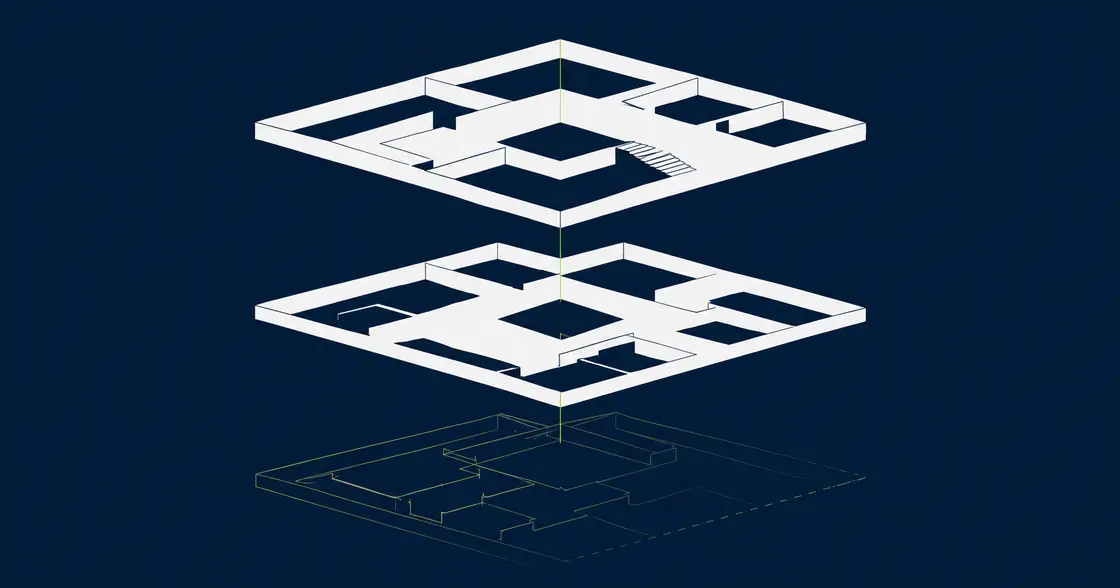
Where consensus actually weakens is the boundary between a context layer and an application layer. One cluster of sources (Anthropic, LangChain, OpenAI, GitHub, Elastic, Cognition) treats context engineering primarily as an application/harness runtime problem: prompt assembly, retrieval policy, memory, compaction, tool selection, sub-agent isolation. A different cluster, Atlan, DataHub, a16z, uses "context layer" to mean a shared enterprise substrate: semantic definitions, ontology and identity resolution, lineage, provenance, and decision memory that multiple agents query.
These views are compatible, not contradictory, but they aren't identical, and 2026 hasn't standardized which one "context engineering" primarily refers to. The clearest synthesis is a three-layer model:
| Layer | What lives here | Who owns it today |
|---|---|---|
| Prompt / interaction layer | How a single request is phrased | The developer, per call |
| Application / harness layer | Memory, compaction, tool selection, sub-agent isolation | Agent frameworks (LangChain, Claude Agent SDK) |
| Shared context platform | Semantic definitions, identity resolution, lineage, governed decision memory | Largely unowned: the gap this blog exists to talk about |
That bottom layer (a shared, governed substrate that multiple agents and frameworks can query, rather than something each application harness reinvents for itself) is the least standardized part of the stack, and the part most enterprises don't have an answer for yet.
That's the layer contextfellow.ai occupies by design: not another agent harness competing with LangChain or Claude Agent SDK for memory-management mindshare, but the shared context platform underneath them: identity resolution, provenance, governed scope, and decision memory that any framework's application layer can call into. Context engineering solved the "how do I assemble a good prompt this turn" problem. It didn't solve "where does the organization's actual context live so every agent can find the same answer."