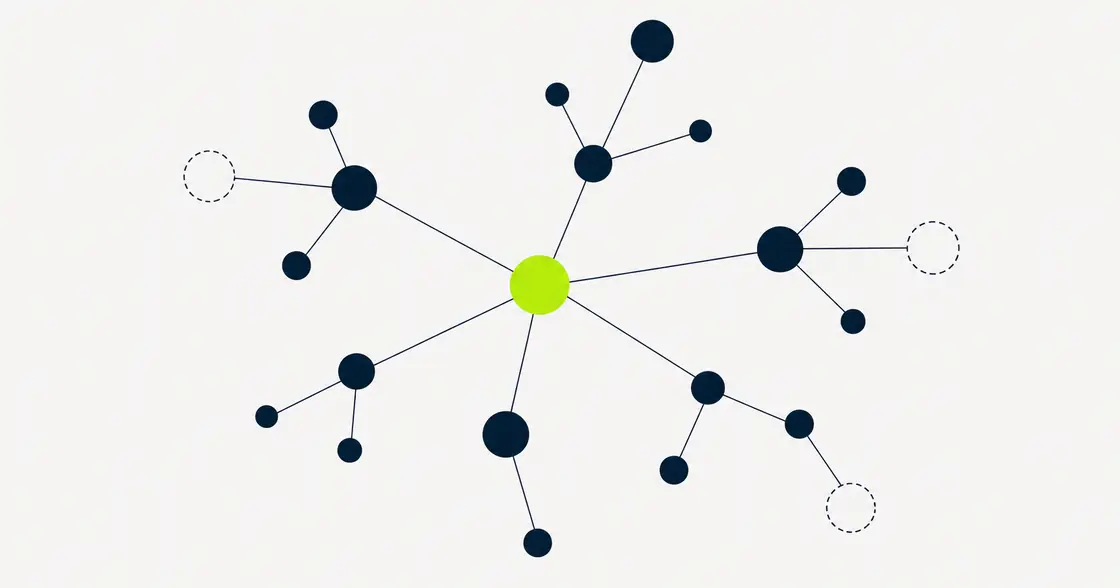
Miller Heiman Strategic Selling, MEDDIC/MEDDPICC, and Challenger all get implemented in CRMs as a mix of standard relationship objects and custom methodology fields, not as a living graph. Salesforce does it with Opportunity Contact Roles and Account Teams; HubSpot with labeled associations like "Decision maker"; Dynamics 365 with stakeholder subgrids. These models are good at recording that a person exists and what role they play. They're much weaker at continually tracking how people influence one another, whether someone is still active in the deal, or whether a contact is genuinely a champion, detractor, or economic buyer.
That gap matters because the underlying buying environment is inherently dynamic. Challenger research puts it directly: "a collection of yeses is not the same as a collective yes." The average B2B buying group has 10+ members, generating roughly 160 human-mediated interactions over the course of a deal. Meanwhile the people themselves keep moving: one enrichment vendor's contact layer processes more than 70,000 job changes a day, and "champion tracking" done manually is widely described by UserGems as unscalable for exactly that reason.
Three reasons the data goes stale
- Sellers are overloaded. Salesforce's State of Sales research shows reps spend only about 40% of a working week actually selling; the rest includes manual data entry that a committee map depends on.
- Methodology fields are front-loaded. Champion, economic buyer, and influence fields get filled in at discovery and stage gates, then rarely revisited unless a deal gets red-flagged.
- Automation covers hard facts, not soft judgment. Tools can refresh titles, org-chart nodes, job changes, and contact validity. They can't determine whether someone is truly a MEDDIC champion (power, influence, and credibility) or a Challenger Mobilizer versus a Talker; those stay human judgment calls even with good tooling.
The layered pattern that actually reduces staleness
The strongest current vendor pattern isn't "fully automatic relationship mapping": nobody has that. It's a layered operating model:
| Layer | What it owns | Refresh mechanism |
|---|---|---|
| CRM system of record | Structured stakeholder objects, methodology scorecards | Manual entry, stage-gated review |
| Activity capture | Engagement and coverage signals | Automated (email/calendar sync) |
| Enrichment/signal vendors | Org charts, job changes, in-market contacts | Automated, daily refresh |
| Human confirmation | Champion strength, detractor status, political influence | Reserved for high-value subjective labels only |
The vendors that meaningfully reduce staleness today, People.ai, Nektar.ai, UserGems, DemandFarm, 6sense, ZoomInfo, and Affinity, each solve a different slice of this stack. None of them fully own the whole lifecycle end to end. That's the tell: this isn't a solved problem, it's a partially-automated one with a permanent human-judgment core.
This is exactly the shape of contextfellow.ai's Buyer Process Map and Persona-Influence matrix: hard facts (titles, org position, activity) stay continuously groundable to source evidence, while soft judgments (champion, gatekeeper, influencer) remain explicit, cited assertions: never silently inferred, never left to decay untouched between deal reviews. A gap in the matrix is held open as a known unknown, not quietly left blank.